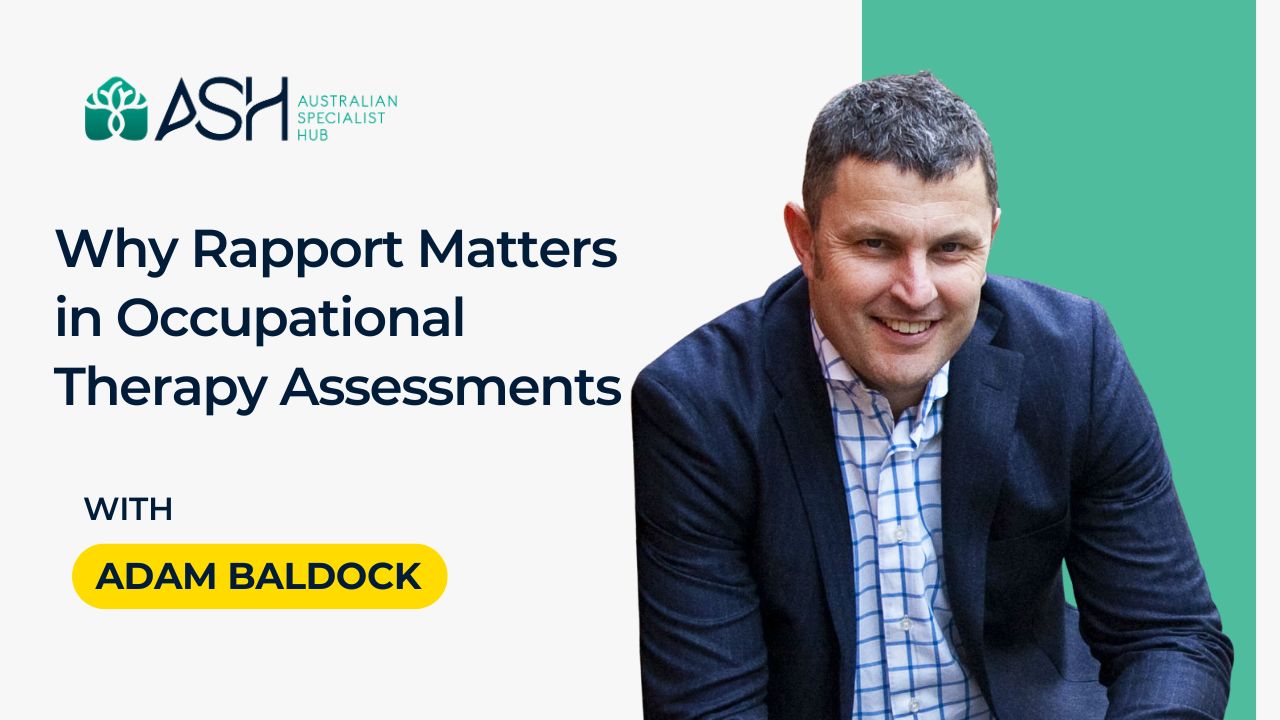
Why Rapport Matters in Occupational Therapy Assessments
For many people, the thought of a medico-legal assessment can be daunting.
They’re often unsure what to expect, worried they’ll be judged, or concerned they’re walking into an interrogation. According to Occupational Therapist Adam Baldock, those concerns are understandable but they don’t have to define the experience.
With more than 24 years of experience across rehabilitation, disability, insurance and medico-legal practice, Adam believes one of the most important parts of any assessment begins before he even walks through the front door.
“One of the first things I do is call people the day before,” he explains. “It’s just courtesy. It gives people the opportunity to ask questions and know who they’re about to meet.”
It’s a simple gesture, but one that often surprises people.
Building trust before the assessment begins
Occupational therapy assessments involve much more than observing how someone completes everyday tasks.
To gain an accurate understanding of a person’s function, an Occupational Therapist needs to understand their story, their environment and the challenges they face every day. That requires trust.
Adam says taking the time to read the documentation thoroughly before meeting someone also helps establish that connection.
“When you can reference details from their history, people realise you’ve taken the time to understand their situation. You can actually see them relax.”
That rapport allows conversations to become more open and helps ensure the assessment reflects the person’s circumstances as accurately as possible.
Why home visits matter
Unlike many other assessments, Occupational Therapy evaluations are often completed in the person’s own home.
There’s a good reason for that.
Observing someone in their everyday environment provides valuable insight into how they navigate daily life from moving around the home and preparing meals to managing stairs, showering, getting in and out of bed, or using a vehicle.
The assessment isn’t about catching people out.
It’s about understanding how they function in the places where they actually live.
“You not only see them in a more relaxed environment, but you also see how they go about things on a day-to-day basis,” Adam says.
Looking beyond the diagnosis
Throughout our chat, Adam shared examples of working with people facing complex physical injuries, intellectual disability, autism and trauma.
While every case is different, his approach remains the same.
It’s not enough to simply identify a diagnosis.
The real question is how that condition affects someone’s ability to function, participate in daily life and maintain long-term stability.
“The whole idea of rehabilitation is stability and sustainability,” Adam explains. “We need to help people function day to day without that constant up-and-down experience.”
That broader perspective is what helps Occupational Therapists identify the supports that will genuinely improve quality of life.
Compassion and objectivity can coexist
One of the biggest misconceptions about medico-legal assessments is that they lack empathy.
Adam’s experiences suggest otherwise.
From spending hours earning the trust of a reluctant rural client to advocating for people living in incredibly challenging circumstances, he believes that objectivity and compassion are not mutually exclusive.
An Occupational Therapist’s role is to provide an independent opinion—but that opinion should always be grounded in respect, careful observation and a genuine understanding of the individual.
Because at the heart of every assessment is a person, not just a report.
Need an experienced Occupational Therapist for a medico-legal assessment?
Australian Specialist Hub connects legal professionals, insurers and organisations with experienced Occupational Therapists who provide independent, evidence-based assessments across a broad range of matters.
📞 1800 287 482
📧 hello@aushub.com.au
🌐 www.aushub.com.au