Get to Know Madelaine DeFazio: How Occupational Therapy Shapes Complex Legal Matters
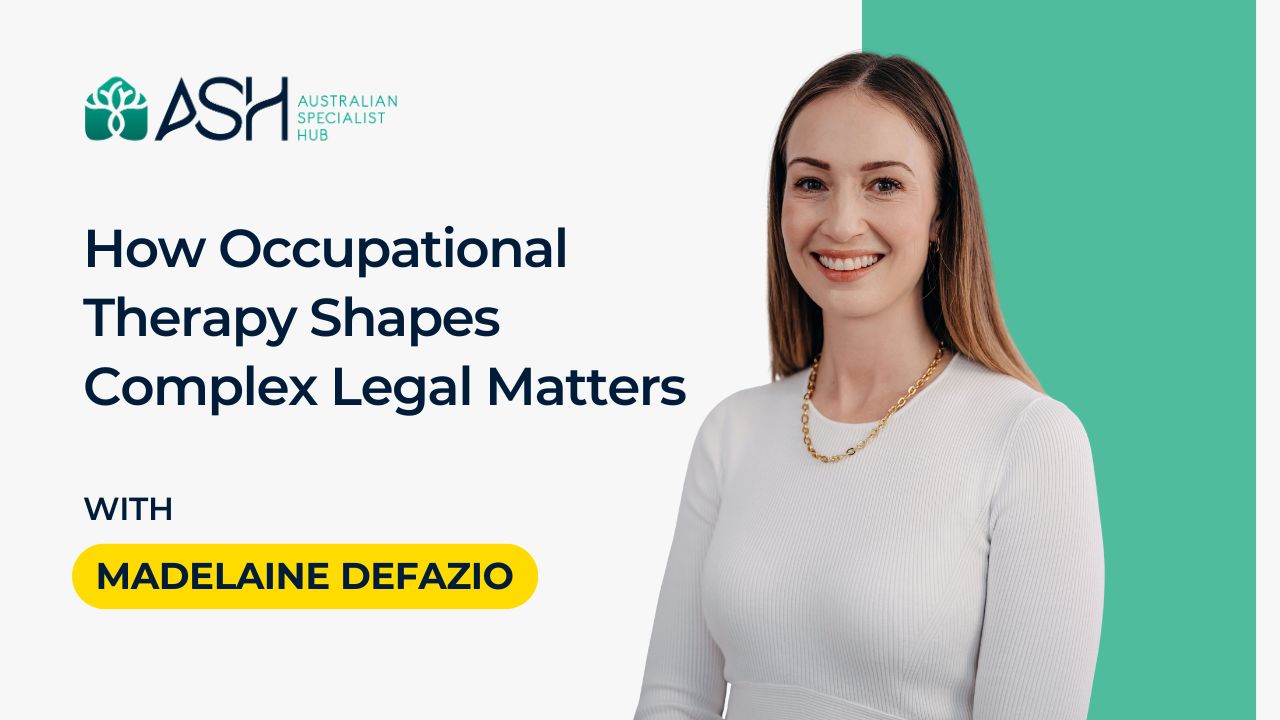
Occupational Therapy is about much more than assessing what someone can or cannot do. It is about understanding how an injury, illness, or disability affects every aspect of a person’s daily life and identifying the supports that can help them regain independence.
With a background in exercise science before transitioning into Occupational Therapy, Madelaine DeFazio has spent the past eight years helping individuals navigate complex functional challenges. In the medico-legal space, her focus is on delivering thorough, evidence-based assessments that provide a clear picture of a person’s functional capacity and everyday needs.
A Career Driven by People
Madelaine’s path into Occupational Therapy began with a desire to better understand people.
Originally studying exercise science, she soon realised she wanted to explore more than physical health alone. Occupational Therapy offered the opportunity to take a holistic approach by considering not only a person’s medical condition, but also their environment, relationships, daily routines, and the challenges that influence their independence. That people-centred philosophy continues to shape her practice today.

Seeing the Whole Picture
One of the defining aspects of Occupational Therapy is the time spent getting to know each individual.
Unlike many medical assessments, functional capacity assessments often involve several hours with the client, observing how they manage everyday activities within their own environment. This may include personal care, household tasks, mobility, community participation, and more.
For Madelaine, every assessment is about building a complete picture of how a person’s life has changed and identifying where support or intervention may be needed. Rather than focusing solely on a diagnosis, she aims to understand the real-world impact of an injury or condition.
Quality Over Quantity
In medico-legal Occupational Therapy, preparation is just as important as the assessment itself.
Madelaine’s approach prioritises quality over quantity. Each assessment involves carefully reviewing medical records, collateral information, and supporting documentation before spending significant time with the client. The report-writing process is equally detailed, ensuring every opinion is supported by objective evidence and a comprehensive understanding of the individual’s circumstances.
Supporting Better Outcomes
Occupational Therapists play an important role in helping individuals maximise their independence.
From recommending home modifications and assistive technology to assessing functional capacity and daily living skills, their work extends far beyond the assessment itself. Every recommendation is designed to improve safety, increase independence, and support meaningful participation in everyday life.
Madelaine believes one of the most rewarding aspects of her profession is seeing individuals regain confidence and develop greater independence after receiving the right support.
Empathy Matters
Many of the people seen in the medico-legal setting are experiencing one of the most challenging periods of their lives.
Madelaine recognises that building rapport and approaching every assessment with empathy are essential to helping individuals feel comfortable sharing their experiences. Taking the time to listen not only helps people feel heard but also contributes to more accurate, balanced, and meaningful assessments.
Learn More from Madelaine DeFazio
In her episode of The Consult, Madelaine shares insights into Occupational Therapy, functional capacity assessments, and the important role Occupational Therapists play in complex medico-legal matters. She also discusses her approach to quality assessments, the value of collaboration, and why understanding the whole person is central to delivering meaningful outcomes.
Listen to the full episode of The Consult with Madelaine DeFazio on Spotify or watch on YouTube to hear the full conversation.